
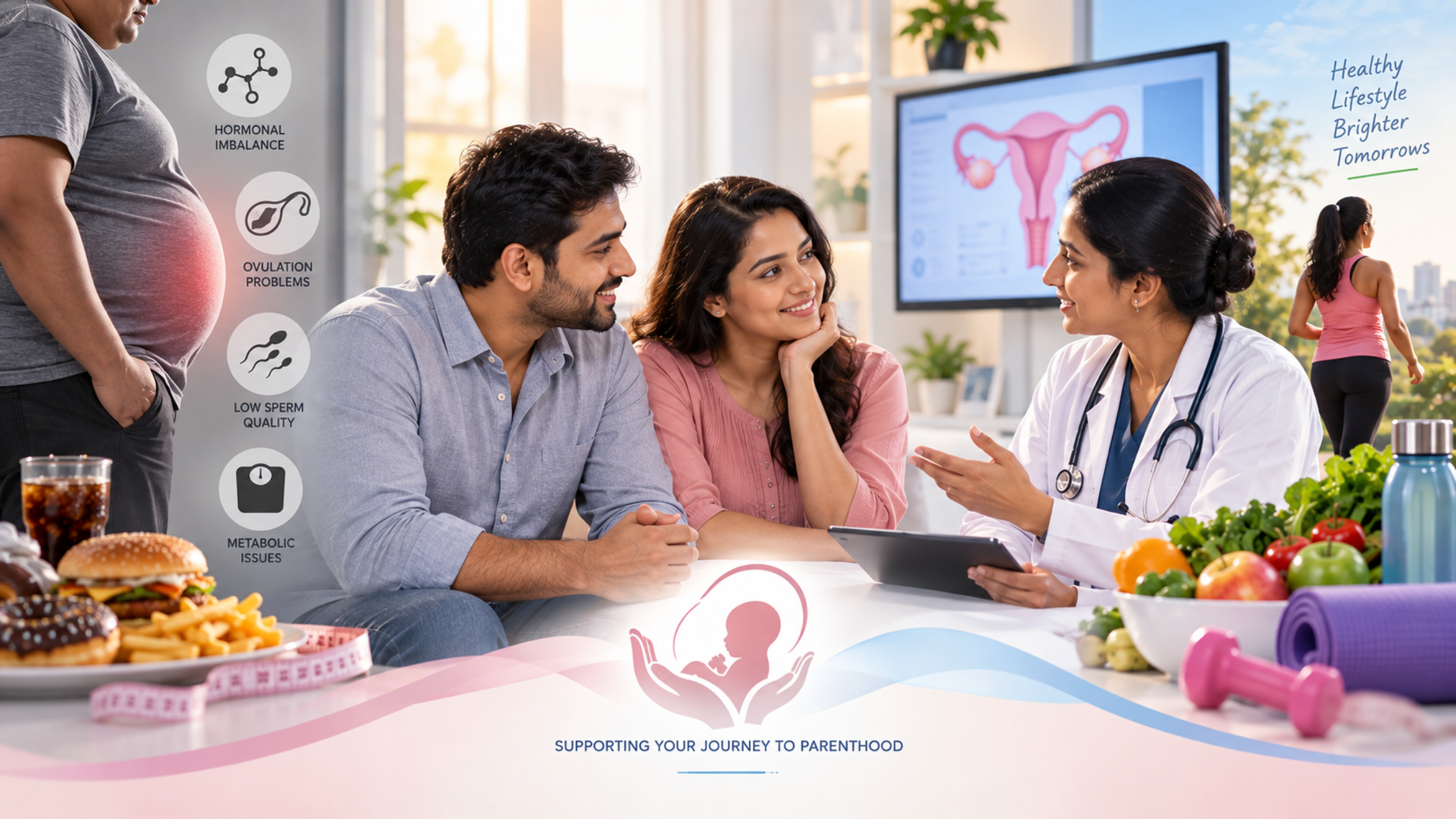
Obesity and Infertility: How Weight Can Affect Male and Female Fertility
Obesity and Infertility are increasingly being discussed together because excess weight can affect hormonal health, ovulation, sperm quality, metabolic health, and pregnancy outcomes. Although body weight is only one of many factors that can influence fertility, maintaining good overall health can support reproductive health in both men and women.
For couples trying to conceive, understanding the connection between Obesity and Infertility can help them make informed decisions about lifestyle, fertility evaluation, and treatment.
If you are looking for a Trusted Fertility hospital in hyderabad, professional fertility guidance can help identify whether weight is contributing to fertility difficulties and whether other factors may also be involved.
What Is the Connection Between Obesity and Infertility?
Obesity can influence several biological processes involved in reproduction. Excess body fat may affect hormone production, insulin sensitivity, ovulation, menstrual cycles, and reproductive function.
However, obesity does not automatically mean that a person will experience infertility. Many people with obesity conceive naturally, while others may have difficulty conceiving because of factors associated with excess weight.
The relationship between Obesity and Infertility can therefore vary significantly from one person to another.
According to the World Health Organization (WHO), overweight and obesity involve abnormal or excessive fat accumulation that may impair health.
For couples experiencing difficulty conceiving, it is important not to assume that weight is the only cause. A complete fertility assessment can help identify the factors that may be affecting conception.
If you are searching for a Trusted Fertility hospital in hyderabad, choosing a fertility centre that evaluates both partners can help provide a more complete understanding of fertility health.
Can Obesity Affect Fertility?
Yes. Obesity can affect fertility in both women and men.
In women, excess weight may be associated with hormonal changes, irregular menstrual cycles, ovulation problems, and metabolic conditions such as insulin resistance.
In men, obesity may be associated with hormonal changes and alterations in semen parameters, including sperm concentration and motility.
The effect is different for every individual. This is why fertility evaluation is important before deciding on a specific treatment or lifestyle approach.
How Does Obesity Affect Female Fertility?
One of the major areas where Obesity and Infertility may be connected is female reproductive health.
Excess body weight can influence hormone regulation and metabolic health, which may affect ovulation and the menstrual cycle in some women.
- Irregular Menstrual Cycles
Some women with obesity may experience irregular periods.
A regular menstrual cycle is often associated with predictable ovulation. When periods become irregular, ovulation may also become irregular in some cases, which can make conception more difficult.
However, irregular periods can have many causes, so medical evaluation is important.
- Ovulation Problems
Ovulation is the process through which an ovary releases an egg.
Problems with ovulation are one of the common causes of female infertility. Hormonal and metabolic changes associated with obesity may interfere with normal ovulatory function in some women.
Women who have irregular periods, difficulty tracking ovulation, or problems conceiving may benefit from consulting a fertility specialist.
- PCOS and Obesity
Polycystic ovary syndrome, commonly known as PCOS, is a hormonal condition that can affect ovulation and fertility.
PCOS can occur in women with different body types. However, excess weight and insulin resistance may worsen some metabolic and reproductive symptoms in women who have PCOS.
The Office on Women’s Health explains that PCOS can affect menstrual cycles, ovulation, and the ability to become pregnant.
If you have PCOS, irregular periods, or difficulty conceiving, a fertility specialist can help determine the appropriate evaluation and treatment options.
- Hormonal Changes
Body fat is biologically active and can influence hormone metabolism.
Changes in hormonal balance may affect reproductive function and ovulation. This is one of the reasons researchers and fertility specialists consider the relationship between Obesity and Infertility when evaluating patients.
- Pregnancy-Related Concerns
The effect of obesity does not necessarily end once conception occurs.
Excess weight may be associated with an increased risk of certain pregnancy complications. Therefore, fertility care should consider both achieving pregnancy and supporting a healthy pregnancy.
How Does Obesity Affect Male Fertility?
The connection between Obesity and Infertility is also important in men.
Fertility is not solely a woman’s health issue. Male factors contribute to a significant proportion of infertility cases, and weight and metabolic health can be among the factors considered during evaluation.
- Hormonal Changes
Obesity can be associated with changes in reproductive hormones.
Hormonal imbalances may influence testosterone levels and sperm production in some men.
- Sperm Quality
Some research has associated obesity with changes in semen parameters.
Potentially affected parameters can include:
- Sperm concentration
- Sperm motility
- Sperm morphology
- Overall semen quality
However, sperm quality is influenced by many factors. Age, smoking, alcohol use, medical conditions, medications, genetics, lifestyle, and environmental factors can all play a role.
For this reason, men experiencing fertility concerns may be advised to undergo a semen analysis as part of a fertility evaluation.
- Metabolic Health
Obesity can be associated with insulin resistance and other metabolic health concerns.
Poor metabolic health may affect reproductive function in some men. Improving overall health can therefore be an important part of addressing fertility concerns.
- Lifestyle Factors
Weight may also be connected with other lifestyle factors that influence reproductive health.
These may include:
- Lack of physical activity
- Poor dietary habits
- Smoking
- Excessive alcohol consumption
- Inadequate sleep
- Chronic stress
Addressing overall health rather than focusing only on body weight can provide a more balanced approach to fertility.
Does Losing Weight Improve Fertility?
One of the most frequently asked questions about Obesity and Infertility is whether losing weight can increase the chances of pregnancy.
For some people, improving overall health and achieving a healthier weight may support reproductive function.
For women who experience obesity-related ovulation problems, lifestyle and weight management may help improve ovulatory function in certain circumstances.
For men, improving metabolic health and adopting healthier lifestyle habits may also support reproductive health.
However, weight loss should not be considered a guaranteed treatment for infertility.
Infertility can have many different causes, including:
- Ovulation disorders
- PCOS
- Endometriosis
- Fallopian tube problems
- Diminished ovarian reserve
- Low sperm count
- Poor sperm motility
- Genetic factors
- Age-related fertility decline
- Unexplained infertility
Therefore, couples should not delay a fertility evaluation simply because they are trying to lose weight.
A Trusted Fertility hospital in hyderabad can assess the individual circumstances of both partners and determine whether additional fertility investigations are appropriate.
How Can Couples Manage Weight While Trying to Conceive?
Healthy lifestyle changes should be realistic, gradual, and sustainable.
Rather than following extreme diets or attempting rapid weight loss, couples can focus on improving their overall health.
Eat a Balanced Diet
A balanced diet can provide important nutrients required for general health.
A healthy eating pattern can include:
- Vegetables
- Fruits
- Whole grains
- Legumes
- Lean protein
- Healthy sources of fat
Limiting excessive consumption of sugary drinks and highly processed foods may also support overall health.
Stay Physically Active
Regular physical activity can support cardiovascular and metabolic health.
The appropriate level and type of exercise can vary depending on an individual’s health status. Anyone with an existing medical condition should discuss an appropriate exercise routine with their healthcare professional.
Maintain Healthy Sleep Habits
Sleep is an important part of overall physical and mental health.
Maintaining a consistent sleep schedule and getting adequate rest can support general well-being while trying to conceive.
Avoid Smoking
Smoking can negatively affect reproductive health in both men and women.
Couples planning pregnancy should consider quitting smoking and can seek professional support if they need help stopping.
Limit Alcohol
Excessive alcohol consumption can affect overall health and may also influence reproductive health.
Couples trying to conceive should discuss alcohol consumption with their healthcare provider.
Manage Stress
Trying to conceive can be emotionally challenging, particularly when pregnancy does not happen as quickly as expected.
Exercise, relaxation techniques, adequate sleep, counselling, and support from family or healthcare professionals can help couples manage stress.
When Should You See a Fertility Specialist?
Understanding Obesity and Infertility is useful, but couples should also know when professional evaluation may be appropriate.
Consider consulting a fertility specialist if:
- You have been trying to conceive without success
- Your periods are consistently irregular
- You have PCOS or another reproductive condition
- You have a history of pelvic surgery
- You have concerns about sperm quality
- You have previously undergone fertility treatment
- You have experienced repeated pregnancy loss
- You are concerned about age-related fertility changes
For women under 35, fertility evaluation is generally recommended after 12 months of regular unprotected intercourse without conception.
For women aged 35 or older, evaluation is generally recommended after 6 months.
Earlier evaluation may be appropriate when there are known fertility concerns.
The American Society for Reproductive Medicine (ASRM) provides information about infertility evaluation and reproductive medicine.
If you are searching for a Trusted Fertility hospital in hyderabad, look for a fertility centre that can evaluate both male and female factors rather than focusing on one potential cause alone.
What Tests May Be Recommended for Infertility?
Fertility testing depends on the couple’s medical history, age, symptoms, and previous pregnancy history.
Tests for Women
A fertility specialist may recommend investigations such as:
- Medical and menstrual history
- Hormonal testing
- Ovulation assessment
- Ovarian reserve assessment
- Ultrasound
- Uterine evaluation
- Fallopian tube assessment
Not every patient requires every test. The evaluation should be tailored to the individual’s circumstances.
Tests for Men
Male fertility evaluation may include:
- Medical history
- Physical examination
- Semen analysis
- Hormonal testing when indicated
- Additional investigations based on initial findings
Both partners may need evaluation because infertility can involve female factors, male factors, a combination of factors, or sometimes no immediately identifiable cause.
Can IVF Help With Obesity and Infertility?
IVF, or in vitro fertilization, is one of several fertility treatment options available to couples.
Whether IVF is appropriate depends on factors such as:
- Age
- Ovarian reserve
- Ovulation
- Fallopian tube health
- Sperm quality
- Previous fertility treatment
- Duration of infertility
- Underlying medical conditions
For some couples, lifestyle management may be recommended alongside fertility treatment.
Other patients may be candidates for treatments such as ovulation induction, IUI, IVF, or ICSI, depending on their diagnosis.
Therefore, IVF should not be considered a universal solution for Obesity and Infertility.
A fertility specialist should first evaluate the underlying factors and recommend a treatment plan based on the individual’s needs.
Couples interested in understanding available fertility services can explore SNH Fertility Care and discuss their concerns with a qualified fertility professional.
Obesity and IVF: Does Weight Matter During Fertility Treatment?
Weight can be one of the health factors considered when planning fertility treatment.
Depending on the individual, obesity may influence:
- Ovulation
- Response to fertility medications
- Pregnancy-related risks
- Anesthesia considerations
- General metabolic health
However, fertility treatment decisions should always be individualized.
Patients should not feel blamed or discouraged because of their weight. The goal should be to provide supportive, evidence-based care while addressing health factors that can potentially be improved.
A Trusted Fertility hospital in hyderabad should consider the patient’s complete reproductive and general health rather than evaluating weight in isolation.
Can Obesity Affect IVF Success?
The relationship between obesity and IVF outcomes can be complex.
Obesity may influence reproductive hormones, ovarian response, pregnancy health, and certain aspects of fertility treatment. However, the effect varies from patient to patient.
Age, ovarian reserve, embryo quality, sperm factors, uterine health, and other medical conditions can also influence fertility treatment outcomes.
This is why couples should discuss their individual circumstances with a fertility specialist rather than relying on a single statistic about IVF success.
The relationship between obesity and IVF outcomes can be complex.
Obesity may influence reproductive hormones, ovarian response, pregnancy health, and certain aspects of fertility treatment. However, the effect varies from patient to patient.
Age, ovarian reserve, embryo quality, sperm factors, uterine health, and other medical conditions can also influence fertility treatment outcomes.
This is why couples should discuss their individual circumstances with a fertility specialist rather than relying on a single statistic about IVF success.
Frequently Asked Questions About Obesity and Infertility
Can obesity cause infertility in women?
Obesity can contribute to fertility difficulties in some women by affecting hormones, ovulation, menstrual cycles, and metabolic health. However, obesity is only one possible factor among many causes of infertility.
Can obesity affect male fertility?
Yes. Obesity may be associated with hormonal changes and alterations in semen parameters such as sperm concentration and motility.
Can losing weight help me get pregnant?
For some individuals, improving overall health and achieving a healthier weight may support reproductive function. However, the effect depends on the underlying cause of fertility difficulties.
Does obesity affect IVF treatment?
Obesity may influence certain aspects of fertility treatment and pregnancy health. The impact varies between individuals, so fertility treatment should be planned according to the patient’s overall medical condition.
Should I lose weight before IVF?
Not every patient needs to reach a particular weight before fertility treatment. A fertility specialist can evaluate your overall health and determine whether weight management should be part of your treatment plan.
Does obesity cause PCOS?
Obesity does not directly cause PCOS. However, excess weight and insulin resistance can be associated with PCOS and may worsen some symptoms in certain women.
When should I consult a fertility specialist?
If you have been trying to conceive without success, have irregular periods, known reproductive health conditions, or concerns about male fertility, consulting a fertility specialist can help identify possible causes and appropriate next steps.
Is Obesity and Infertility treatable?
Many fertility problems can be evaluated and managed with lifestyle changes, medicines, fertility procedures, or assisted reproductive techniques, depending on the underlying cause. A personalized assessment is necessary to determine the most appropriate approach.
Obesity and Infertility can be connected through hormonal, metabolic, reproductive, and lifestyle factors. However, infertility is usually more complex than one factor alone.
If you are trying to conceive, it is important not to assume that weight is the only reason pregnancy has not occurred. A complete fertility evaluation can help identify potential causes and determine whether lifestyle management, medication, IUI, IVF, ICSI, or another treatment approach may be appropriate.
The goal should not simply be to focus on a number on the weighing scale. It should be to improve overall health, understand individual fertility factors, and receive appropriate medical guidance.
For couples looking for a Trusted Fertility hospital in hyderabad, choosing a fertility care provider with appropriate expertise, diagnostic support, and individualized treatment planning can be an important step.
Take the Next Step Toward Parenthood
Your fertility journey is personal, and the right evaluation can help you understand your options with greater clarity.
If you are concerned about Obesity and Infertility, don’t delay seeking professional guidance. Discuss your fertility concerns with a qualified specialist and understand the treatment options that may be appropriate for you.
Looking for a Trusted Fertility hospital in hyderabad?
Explore fertility care at SNH Fertility Care and take the next step toward understanding your fertility and parenthood options.
Book a fertility consultation today and begin your journey toward informed, personalized fertility care.