
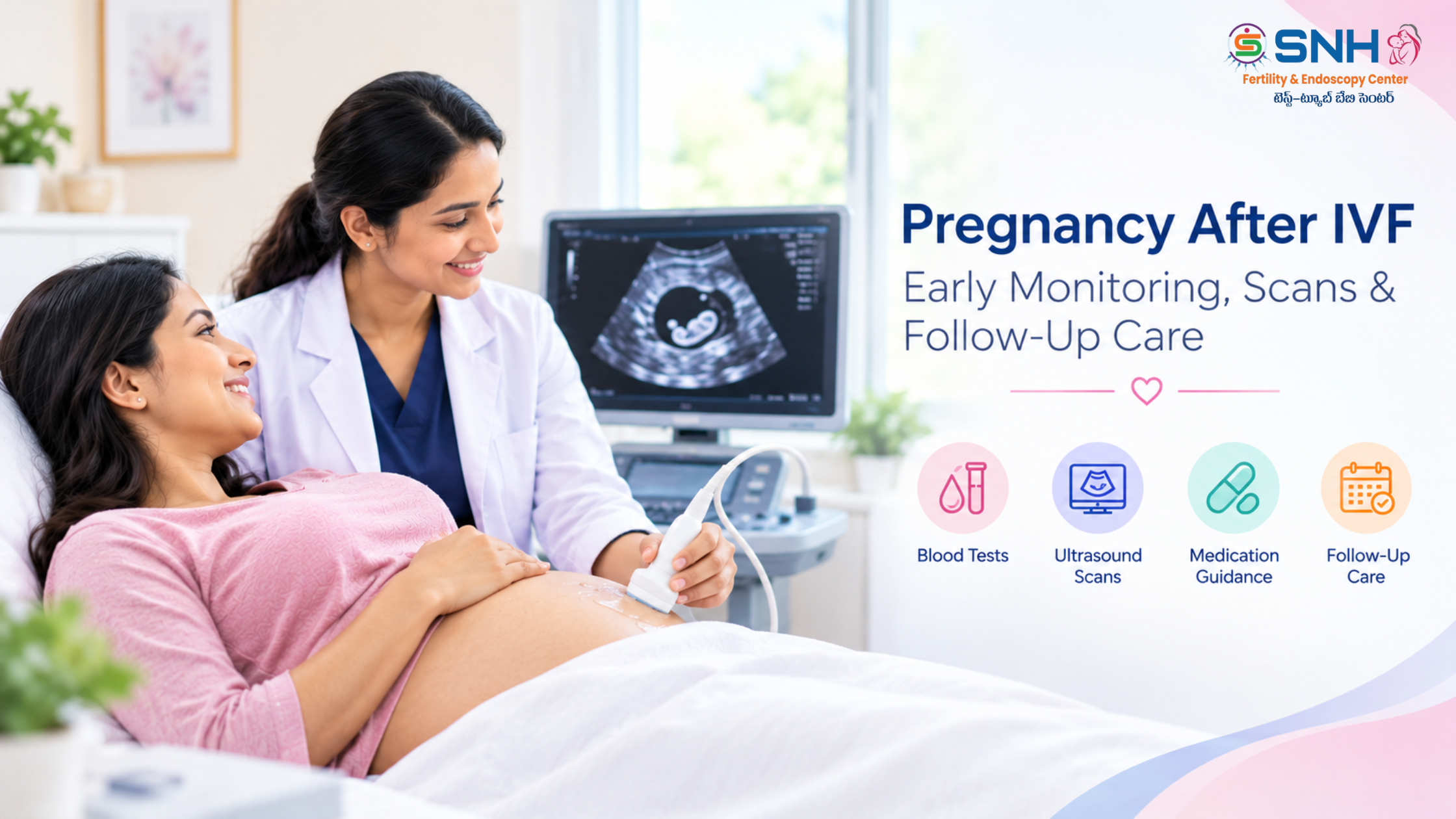
Pregnancy After IVF: Early Monitoring, Scans & Follow-Up Care
A positive pregnancy test after in vitro fertilization (IVF) is an important milestone. However, early pregnancy monitoring remains essential to assess the pregnancy’s location, development, and need for further medical care. Blood tests, ultrasound scans, medication guidance, and scheduled consultations help fertility specialists determine the appropriate next steps.
For couples researching trusted fertility hospitals in Nellore, understanding the care required after a positive IVF test can help them prepare for early pregnancy appointments and follow their clinician’s recommendations.
What Happens After a Positive IVF Pregnancy Test?
After a positive IVF pregnancy test, the fertility specialist may recommend blood tests to measure human chorionic gonadotropin (hCG), review prescribed medications, and schedule an early ultrasound. The scan helps assess whether the pregnancy is inside the uterus and whether early developmental milestones are visible. Follow-up care is individualized according to the test results, symptoms, and medical history.
1. Why Is Early Pregnancy Monitoring Important After IVF?
Early monitoring helps healthcare professionals assess pregnancy progress and identify potential complications that may require timely evaluation.
The monitoring plan may include:
- Blood tests: To measure hCG levels and assess changes when needed.
- Medication review: To confirm the appropriate use and duration of prescribed fertility medicines.
- Ultrasound scans: To assess pregnancy location and early development.
- Clinical consultations: To review symptoms, medical history, and next steps.
A positive test alone cannot confirm the location or ongoing development of a pregnancy. This is why attending recommended follow-up appointments is important.
If you are exploring trusted fertility hospitals in Nellore, consider the availability of clear medical guidance and coordinated follow-up care. Learn more about SNH Fertility Care.
2. When Should You Have Your First Ultrasound After IVF?
An early pregnancy ultrasound is often scheduled at approximately 5–7 weeks of gestational age, although the appropriate timing varies according to the embryo transfer date, pregnancy findings, and clinical circumstances.
A transvaginal ultrasound may be recommended because it can provide detailed images during early pregnancy.
The scan may help the clinician assess:
- Whether the gestational sac is inside the uterus.
- Whether a yolk sac or embryo is visible.
- Whether cardiac activity can be detected at that stage.
- Whether additional monitoring is needed.
If the scan takes place too early, the findings may be inconclusive. Your clinician may recommend a repeat ultrasound after an appropriate interval rather than drawing conclusions from a single early scan.
For further information about pregnancy location and diagnostic assessment, read the NHS guide to ectopic pregnancy diagnosis.
3. What Do Follow-Up Scans Check During Early IVF Pregnancy?
Follow-up scans are recommended according to the pregnancy’s progress and the clinician’s assessment.
Early pregnancy location scan
This scan checks whether the pregnancy is located inside the uterus and looks for early structures that are expected at that stage.
Embryo development and cardiac activity
A subsequent scan may assess the embryo’s development and detect cardiac activity when appropriate for the gestational age. If the pregnancy is too early for a clear assessment, another scan may be required.
Further pregnancy assessments
Additional ultrasound examinations may be recommended depending on the initial findings, symptoms, medical history, and obstetric care plan.
Not everyone needs the same number of scans. The treating clinician determines the schedule based on individual needs.
4. Which Medicines Should You Continue After IVF?
Some patients receive progesterone or other prescribed medicines as part of their fertility treatment protocol. The type of medicine and the duration of treatment depend on the individual’s treatment plan.
Patients should:
- Take prescribed medicines according to their clinician’s instructions.
- Ask before starting any new medicine, supplement, or herbal product.
- Avoid stopping progesterone or other fertility medicines without medical advice.
- Report side effects or concerns to the treating team.
Your fertility specialist can explain which medicines remain necessary after pregnancy confirmation and when any changes should be made.
5. How Can You Support Your Health After a Positive IVF Test?
Healthy daily habits can complement medical care during pregnancy.
Nutrition: Follow a balanced diet and ask your healthcare professional about prenatal vitamins and folic acid.
Hydration: Drink adequate fluids according to your individual needs.
Lifestyle: Avoid smoking and alcohol. Ask your clinician about exercise, travel, work, and other daily activities.
Appointments: Attend scheduled blood tests, scans, and antenatal consultations.
Emotional well-being: Waiting for scan results can be stressful. Discuss your concerns with your healthcare team and seek emotional support when needed.
For general information about routine pregnancy care, consult the American College of Obstetricians and Gynecologists’ guide to prenatal care.
6. What Warning Signs Require Immediate Medical Attention After IVF?
Seek urgent medical assessment if you experience severe or worsening abdominal or pelvic pain, heavy vaginal bleeding, shoulder-tip pain, fainting, or significant dizziness. These symptoms can indicate a serious complication, including ectopic pregnancy or internal bleeding.
Contact your fertility clinic promptly if you develop new symptoms or are concerned about your pregnancy. Do not wait for a routine appointment when symptoms are severe.
7. How Do You Choose a Fertility Hospital for Follow-Up Care in Nellore?
When comparing trusted fertility hospitals in Nellore, consider factors that support informed decisions and continuity of care:
- Qualified fertility and women’s healthcare professionals.
- Clear explanations of test results and treatment plans.
- Access to appropriate diagnostic assessments.
- Guidance on medication and follow-up schedules.
- Coordination with an obstetrician or antenatal care provider when needed.
Ask the clinic which follow-up services are available and how urgent concerns are handled.
To enquire about an appointment with SNH Fertility Care, visit the appointment page.
Frequently Asked Questions
- How soon can an ultrasound confirm pregnancy after IVF?
An early ultrasound is often scheduled around 5–7 weeks of gestational age. The exact timing depends on the pregnancy timeline and clinical findings.
- Are hCG blood tests necessary after a positive IVF test?
Your clinician may recommend one or more hCG tests to assess pregnancy hormone levels and how they change over time. The need for repeat testing depends on the individual situation.
- Can an early scan fail to show a heartbeat?
Yes. If the scan is performed early, cardiac activity may not yet be visible. The clinician may recommend a repeat scan after an appropriate interval to assess development.
- How long should progesterone be continued after IVF?
The duration varies according to the treatment protocol and individual circumstances. Continue the medicine as prescribed and consult your fertility specialist before making changes.
- Is pregnancy after IVF monitored differently from natural conception?
Early care may include additional monitoring related to fertility treatment, such as reviewing treatment history and confirming pregnancy location. The overall plan is individualized, and routine antenatal care remains important.
- Where can I learn more about fertility care in Nellore?
Visit the SNH Fertility Care website to learn more about the clinic and its services, and contact the clinic to enquire about appropriate care.
Your Next Steps After a Successful IVF Pregnancy
Pregnancy after IVF involves important early milestones, including pregnancy confirmation, ultrasound assessment, medication review, and follow-up consultations. Following an individualized care plan helps ensure that concerns are assessed and appropriate next steps are taken.
For people researching trusted fertility hospitals in Nellore, informed decision-making and consistent communication with qualified healthcare professionals are important parts of the care journey.
Explore SNH Fertility Care or request an appointment to enquire about fertility care and follow-up guidance