
IVF Treatment Explained: Process, Preparation, Success Rates & What to Expect
For couples trying to conceive, hearing the words IVF treatment can bring a mixture of hope, questions, and uncertainty. How does IVF work? Who needs IVF? How long does the process take? Is IVF painful? What are the chances of success?
In vitro fertilization (IVF) is an assisted reproductive technology in which fertilization takes place outside the body. It is used for a range of fertility problems and involves several carefully monitored stages, from ovarian stimulation and egg retrieval to fertilization, embryo development, and embryo transfer.
Choosing the right fertility team is an important part of the journey. Couples looking for a Trusted Fertility center in Nellore should consider factors such as specialist expertise, laboratory facilities, personalized treatment planning, safety protocols, and transparent communication.
This guide explains the IV
What Is IVF Treatment?
IVF, or in vitro fertilization, is a fertility treatment in which eggs are collected from the ovaries and fertilized with sperm in a laboratory. Once embryos develop, an embryo may be transferred into the uterus with the goal of achieving pregnancy.
IVF may be recommended when pregnancy has not occurred through other treatments or when certain fertility conditions make IVF a suitable option. Depending on the individual situation, IVF may also involve ICSI (intracytoplasmic sperm injection), where a single sperm is injected directly into an egg.
A fertility specialist will first evaluate both partners before recommending IVF. This is one reason choosing a Trusted Fertility center in Nellore can be important: treatment should be based on an individual’s fertility history, test results, age, ovarian reserve, sperm health, and other medical factors rather than a one-size-fits-all approach.
Who May Need IVF?
IVF can be considered for several fertility-related situations, including:
- Blocked or damaged fallopian tubes
- Certain causes of male infertility
- Reduced ovarian reserve
- Endometriosis
- Ovulation-related fertility problems
- Unexplained infertility
- Previous unsuccessful fertility treatments
- Certain genetic or reproductive conditions
- Situations where other fertility treatments have not been successful
Not every couple with infertility needs IVF. A fertility specialist can recommend the most appropriate treatment after evaluating both partners.
If you are considering treatment, visiting a Trusted Fertility center in Nellore for a comprehensive fertility assessment can help you understand which options may be appropriate for your situation.
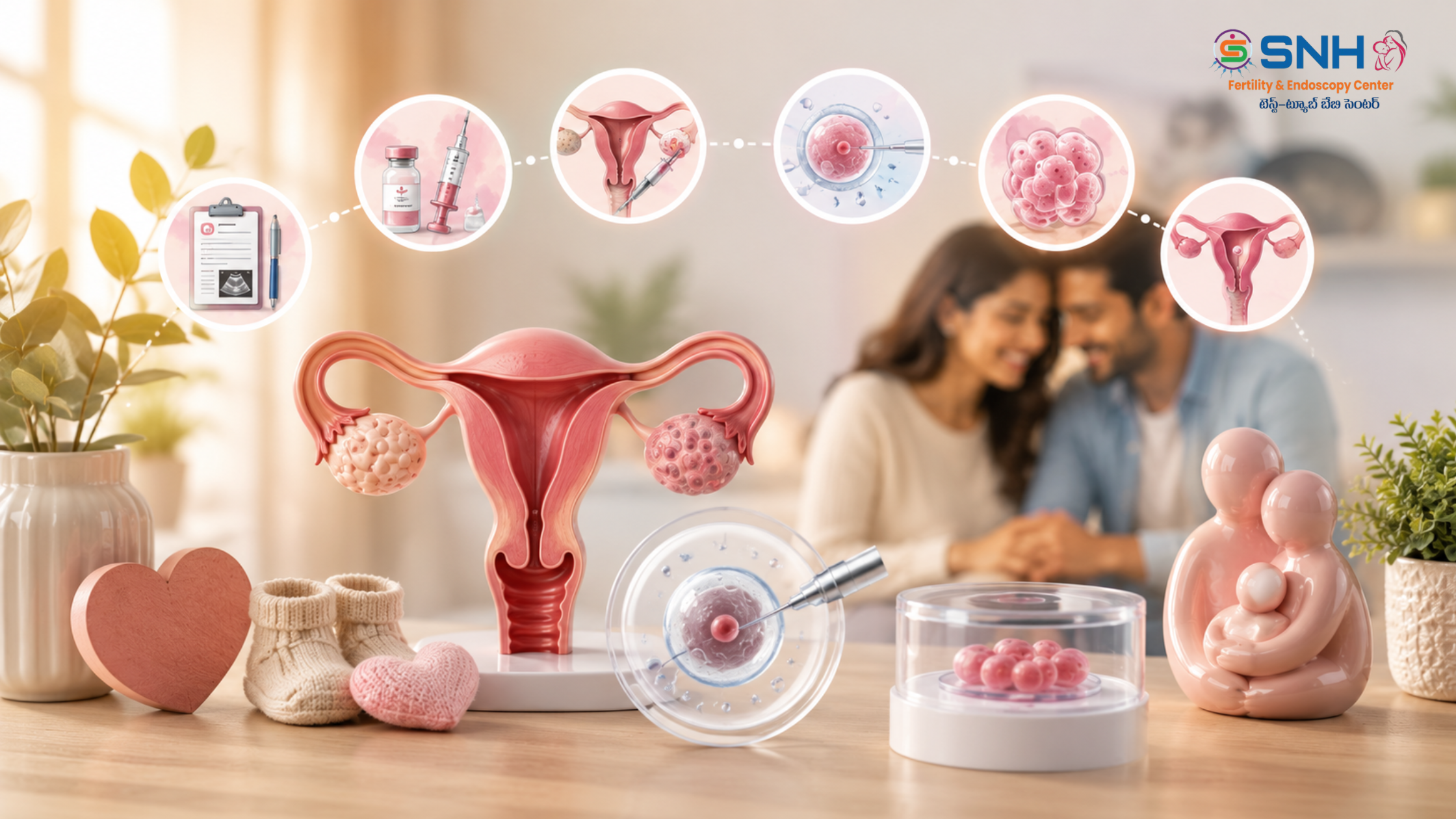
IVF Treatment Process: Step by Step
- Initial Consultation and Fertility Evaluation
The IVF journey usually begins with a consultation. Your doctor will review your medical history, previous pregnancies or fertility treatments, menstrual history, medications, and other relevant factors.
Tests may include blood investigations, ultrasound scans, ovarian reserve assessment, and semen analysis. Depending on the patient’s history, additional tests may also be recommended. Fertility clinics commonly use hormone testing, ultrasound, ovulation assessment, and other investigations to determine the most appropriate treatment plan.
At a Trusted Fertility center in Nellore, couples should feel comfortable asking questions about the proposed treatment, expected timeline, medications, costs, and possible alternatives.
- Ovarian Stimulation
During a typical IVF cycle, fertility medications are used to stimulate the ovaries to develop multiple follicles rather than the single dominant follicle that usually develops during a natural menstrual cycle.
The response to medication is monitored using ultrasound scans and, when appropriate, blood tests. Your doctor may adjust medications depending on how your ovaries respond.
The goal is not simply to produce as many eggs as possible, but to achieve an appropriate response while maintaining patient safety.
- Egg Retrieval
Once the follicles have developed adequately, a trigger medication is administered according to the treatment plan. Egg retrieval is then performed using a procedure guided by ultrasound.
The retrieved eggs are transferred to the embryology laboratory, where they are assessed and prepared for fertilization.
Modern IVF laboratories play an important role in the treatment process because embryo development occurs under carefully controlled laboratory conditions.
- Fertilization
The retrieved eggs are combined with sperm in the laboratory. Depending on sperm quality and the couple’s circumstances, conventional IVF or ICSI may be recommended.
With ICSI, an embryologist injects a single sperm directly into a mature egg. This can be particularly useful in certain cases of male-factor infertility.
Not every retrieved egg will necessarily fertilize, and not every fertilized egg will develop into an embryo suitable for transfer. This is a normal part of human reproduction and IVF.
- Embryo Development
After fertilization, embryos are monitored in the embryology laboratory as they develop.
Some embryos may continue developing to the blastocyst stage. The embryology team and fertility specialist assess embryo development and determine the most appropriate transfer or freezing strategy.
In some situations, additional embryo testing may be discussed. Whether such testing is appropriate depends on the couple’s medical circumstances and should be discussed with a fertility specialist.
- Embryo Transfer
An embryo selected for transfer is placed into the uterus using a thin catheter.
The procedure is generally brief, although the exact experience can vary between individuals.
Depending on the treatment plan, a fresh or frozen embryo transfer may be considered. Your fertility specialist will explain which approach is appropriate for you.
For couples working with a Trusted Fertility center in Nellore, it is important to understand not only the transfer procedure but also why a particular embryo-transfer strategy has been recommended.
- Pregnancy Test and Follow-Up
After embryo transfer, you will be given instructions about medications, activity, and follow-up.
A pregnancy test is performed at the appropriate time recommended by your fertility team. Testing too early can sometimes create confusion, so it is best to follow your clinic’s instructions.
If pregnancy is confirmed, further monitoring will be arranged to assess early pregnancy development.
How Long Does IVF Treatment Take?
The timeline differs depending on the treatment protocol and individual circumstances.
A typical IVF cycle can take several weeks. The HFEA notes that one IVF cycle commonly takes around four to six weeks, although some treatment protocols may be shorter.
The complete journey may take longer when additional investigations, treatment preparation, embryo freezing, or other procedures are required.
Therefore, rather than focusing only on the number of days, couples should ask their fertility specialist for a personalized treatment timeline.
IVF Preparation: How Can You Prepare?
Good preparation can make the IVF journey more organized and comfortable.
Before treatment:
- Attend all recommended consultations and tests.
- Take medications exactly as prescribed.
- Maintain a balanced and nutritious diet.
- Avoid smoking and recreational drug use.
- Limit alcohol according to your doctor’s advice.
- Maintain a healthy level of physical activity.
- Get adequate sleep.
- Discuss existing medications and medical conditions with your doctor.
- Attend appointments with your partner whenever possible.
- Prepare emotionally and financially for the treatment journey.
It is also useful to prepare a list of questions before your fertility consultation. Reputable fertility organizations encourage patients to understand their treatment plan and ask questions before making decisions.
What Factors Affect IVF Success Rates?
One of the most common questions couples ask is, “What is the IVF success rate?”
There is no single success rate that applies to everyone. IVF outcomes can vary based on several factors, including:
- Age
- Ovarian reserve
- Egg quality
- Sperm quality
- Embryo quality
- Underlying fertility conditions
- Uterine health
- Previous fertility treatment history
- Overall health
- Laboratory and clinical practices
It is also important to understand that fertilization does not automatically result in pregnancy. During IVF, not every egg fertilizes, not every fertilized egg develops into a blastocyst, and not every embryo implants successfully.
Therefore, couples should be cautious about clinics or advertisements that promise a guaranteed IVF pregnancy.
A Trusted Fertility center in Nellore should provide realistic, individualized information rather than promising guaranteed results.
Is IVF Safe?
IVF is a well-established fertility treatment, but like any medical treatment, it has potential risks.
For example, fertility medications can sometimes cause ovarian hyperstimulation syndrome (OHSS), which is why monitoring during ovarian stimulation is important.
Other considerations may include discomfort from injections, egg retrieval-related complications, multiple pregnancy, and pregnancy-related risks. Your doctor should explain the potential benefits and risks based on your individual circumstances.
For reliable general information about IVF safety and treatment considerations, couples can also refer to the American Society for Reproductive Medicine (ASRM). American Society for Reproductive Medicine – IVF information
How to Choose the Right IVF Centre
Choosing a fertility clinic is an important decision. Look beyond advertisements and consider:
Experienced fertility specialists: Ask about the qualifications and experience of the doctors and embryology team.
Advanced laboratory facilities: IVF depends heavily on laboratory procedures, so appropriate embryology facilities are important.
Personalized treatment: Your treatment should be based on your medical history and fertility evaluation.
Transparent communication: The clinic should explain treatment options, potential risks, expected timelines, and costs clearly.
Comprehensive care: It can be helpful when diagnostics, fertility treatment, and related services are coordinated in one setting.
For couples searching for a Trusted Fertility center in Nellore, SNH Fertility Care provides IVF/ICSI, IUI, male infertility treatment, fertility preservation, diagnostics, and other reproductive-care services.
You can learn more about the fertility services and treatment approach at SNH Fertility Care.
Frequently Asked Questions About IVF
- Is IVF painful?
The experience varies from person to person. Some parts of IVF, such as injections and egg retrieval, may cause discomfort. Your fertility team will explain what to expect and how discomfort is managed.
- How many IVF cycles are needed?
There is no fixed number of cycles required for every couple. Some couples achieve pregnancy after one cycle, while others may need additional treatment. Your age, fertility diagnosis, embryo development, and previous treatment outcomes can influence the recommended approach.
- Can IVF guarantee pregnancy?
No fertility treatment can guarantee pregnancy. IVF can provide an important opportunity for couples facing certain fertility challenges, but outcomes vary between individuals.
- Is IVF suitable for everyone?
No. IVF is not automatically the first treatment for every fertility problem. A fertility specialist should evaluate both partners and recommend treatment according to the underlying cause.
- How long after embryo transfer can pregnancy be confirmed?
Your fertility clinic will recommend the appropriate time for pregnancy testing. It is generally better to follow the clinic’s instructions rather than testing very early.
- Can men also require fertility treatment during IVF?
Yes. Male-factor infertility can contribute to difficulty conceiving. Depending on the sperm analysis and other findings, treatments such as ICSI may be considered.
Begin Your IVF Journey With the Right Guidance
IVF can seem complicated when you first hear about it, but understanding each stage can make the journey easier to navigate. From the initial fertility evaluation and ovarian stimulation to egg retrieval, embryo development, transfer, and pregnancy testing, every step should be carefully planned and monitored.
If you are looking for a Trusted Fertility center in Nellore, choosing a clinic that combines experienced specialists, modern fertility technology, personalized treatment planning, and compassionate patient care can help you make informed decisions.
SNH Fertility Care provides fertility and reproductive services with a focus on personalized care and advanced fertility treatment. You can explore the available services and request a consultation through SNH Fertility Care.
Ready to understand your fertility options? Schedule a consultation with a fertility specialist and take the next step toward your parenthood journey.
F process, preparation, success factors, and what couples can expect at each stage.