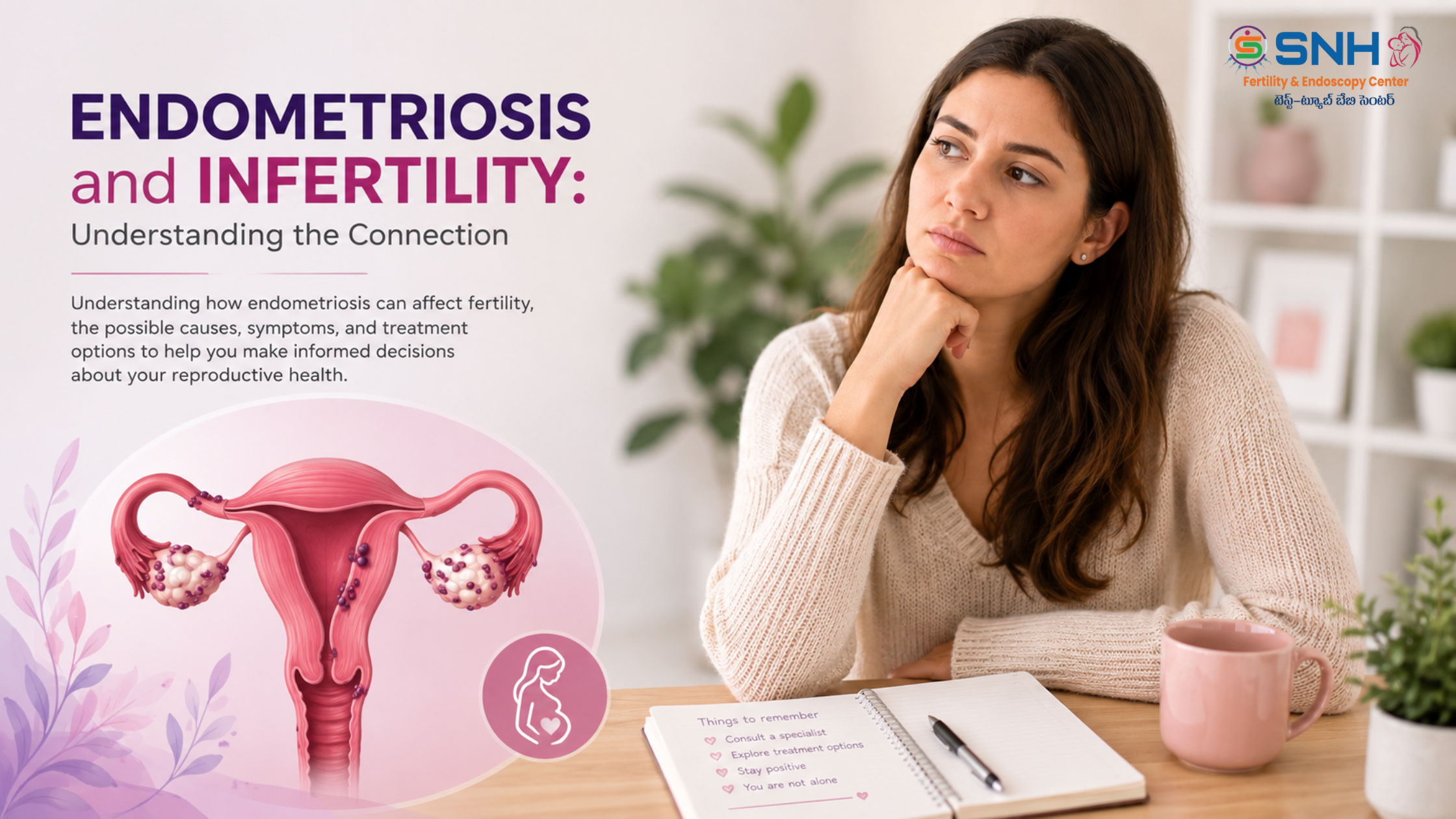
Endometriosis and Infertility: Understanding the Connection
Yes, endometriosis can affect fertility and may make it more difficult for some women to become pregnant. The condition can cause inflammation, scar tissue and changes around the ovaries and fallopian tubes. However, having endometriosis does not mean that pregnancy is impossible. Depending on age, severity of endometriosis, ovarian reserve, fallopian tube health and other fertility factors, treatment may range from medical management and surgery to assisted reproductive treatments such as IUI or IVF.
If you have endometriosis and are experiencing difficulty conceiving, an early fertility evaluation can help identify the factors affecting your chances of pregnancy.
What Is Endometriosis?
Endometriosis is a condition in which tissue similar to the lining of the uterus grows outside the uterus. It commonly affects areas such as the ovaries, fallopian tubes and the tissue lining the pelvis.
The condition can cause inflammation and scar tissue formation and may result in symptoms such as painful periods, pelvic pain and difficulty becoming pregnant.
Although endometriosis is commonly associated with pelvic pain, some women may have few or no obvious symptoms. In some cases, difficulty conceiving may be one of the reasons the condition is discovered.
How Does Endometriosis Affect Fertility?
Endometriosis may affect fertility in several ways. The exact impact differs from woman to woman.
- Inflammation in the Pelvis
Endometriosis is associated with inflammation within the pelvic environment. Inflammation may interfere with processes involved in fertilization and reproduction.
- Scar Tissue and Adhesions
Endometriosis can lead to adhesions, which are bands of scar tissue that may alter the normal position or movement of reproductive organs.
In more severe cases, changes involving the fallopian tubes and surrounding pelvic structures may make it harder for the egg and sperm to meet.
- Ovarian Endometriosis
Endometriosis can sometimes develop on the ovaries and form cysts called endometriomas. Depending on the individual situation and previous treatment, ovarian involvement may be relevant when assessing fertility.
- Changes to Pelvic Anatomy
Moderate or severe endometriosis may cause changes in the normal anatomy of the pelvis. This can potentially interfere with the function of the ovaries, fallopian tubes or other reproductive structures.
- Possible Effects on Egg and Embryo Development
Researchers have proposed several mechanisms through which endometriosis may influence fertility, including inflammatory and cellular changes that could affect reproductive processes. However, the relationship is complex and does not affect every patient in the same way.
Can Endometriosis Cause Infertility?
Endometriosis is associated with infertility, but it does not mean that every woman with endometriosis will experience infertility.
The American College of Obstetricians and Gynecologists identifies endometriosis as a common cause of infertility. The effect on fertility can depend on factors such as the location and severity of the disease, ovarian function, fallopian tube health, age and other fertility factors.
This is why fertility evaluation should be personalized rather than based only on an endometriosis diagnosis.
What Are the Symptoms of Endometriosis?
Possible symptoms include:
- Painful menstrual periods
- Chronic or recurring pelvic pain
- Pain during or after sexual intercourse
- Heavy or irregular menstrual bleeding
- Pain during bowel movements or urination, particularly around menstruation
- Difficulty becoming pregnant
- Abdominal or pelvic discomfort
The presence or absence of symptoms does not necessarily indicate how severely endometriosis may affect fertility.
If you experience persistent or severe menstrual pain, pelvic pain or difficulty conceiving, speaking with a gynecologist or fertility specialist can help determine whether further evaluation is appropriate.
How Is Endometriosis Diagnosed?
Diagnosis begins with a detailed discussion of symptoms, menstrual history and medical history.
Depending on the individual situation, a doctor may recommend:
- Pelvic examination
- Ultrasound
- Assessment of ovarian reserve
- Evaluation of the fallopian tubes
- Other fertility investigations
- Laparoscopy in selected cases
A fertility evaluation may also include assessment of the male partner because infertility can involve factors affecting either or both partners.
Your doctor will determine which investigations are appropriate based on your symptoms and fertility goals.
Can Women With Endometriosis Get Pregnant Naturally?
Yes, some women with endometriosis become pregnant naturally.
However, the likelihood of conception can vary depending on several factors, including:
- Age
- Severity and location of endometriosis
- Ovarian reserve
- Fallopian tube condition
- Duration of infertility
- Sperm health
- Previous pelvic surgery
- Other reproductive conditions
Therefore, women with endometriosis who are planning pregnancy should discuss their individual fertility situation with a qualified specialist.
What Are the Treatment Options for Endometriosis-Related Infertility?
There is no single treatment that is suitable for every woman with endometriosis-related infertility.
Treatment may include one or more approaches depending on the patient’s symptoms and fertility goals.
Medical Management
Medication may be used to control pain and manage symptoms associated with endometriosis. However, treatments used to control symptoms are not necessarily designed to improve fertility directly.
Laparoscopic Surgery
In selected patients, laparoscopic surgery may be considered to diagnose or treat endometriosis, remove certain lesions or endometriomas, or address adhesions.
The decision to undergo surgery should consider factors such as age, ovarian reserve, severity of disease, symptoms and future fertility plans.
IUI Treatment
Intrauterine insemination, or IUI, may be considered for selected patients depending on factors such as fallopian tube function, sperm parameters, age and the severity of endometriosis.
You can learn more about how IUI compares with IVF in our guide to IUI vs IVF: Which Fertility Treatment Is Right for You?.
IVF Treatment
In vitro fertilization (IVF) may be an option for some women with endometriosis-associated infertility.
IVF involves stimulating the ovaries, retrieving eggs, fertilizing them with sperm in a laboratory and transferring a suitable embryo into the uterus.
The decision to recommend IVF depends on the patient’s overall fertility assessment rather than the diagnosis of endometriosis alone.
When Should You See a Fertility Specialist?
Consider speaking with a fertility specialist if:
- You have been diagnosed with endometriosis and want to become pregnant.
- You have been trying to conceive without success.
- You have severe or persistent pelvic pain.
- You have ovarian endometriomas.
- You have a history of pelvic surgery.
- You have concerns about your ovarian reserve.
- You want to understand whether IUI or IVF may be appropriate.
Early evaluation can be particularly helpful because fertility is influenced by age as well as several other reproductive factors.
How Can You Choose a Trusted Fertility Hospital in Nellore?
Choosing a fertility centre is an important step when seeking treatment for endometriosis-related infertility.
When searching for a trusted fertility hospital in Nellore, consider:
- Experience of the fertility specialists
- Availability of fertility investigations
- IVF, IUI and ICSI treatment options
- Fertility preservation services
- Diagnostic facilities
- Individualized treatment planning
- Clear communication about treatment options
- Appropriate follow-up and patient support
At SNH Fertility Care, fertility services include IVF, IUI, ICSI, fertility preservation, male infertility treatment, genetic screening and diagnostic services. The centre focuses on personalized fertility care and treatment planning.
You can explore the SNH Fertility Care to learn more about the centre and available fertility services.
Why Early Fertility Evaluation Matters
Endometriosis can affect fertility in different ways, and its impact varies between individuals. Waiting too long before seeking an evaluation may make fertility planning more challenging, particularly as age can also influence reproductive potential.
An evaluation can help identify whether endometriosis is affecting fertility and whether other factors may also be contributing to difficulty conceiving.
The goal is not simply to treat the diagnosis but to understand the individual’s complete reproductive health and choose an appropriate treatment strategy.
Frequently Asked Questions About Endometriosis and Infertility
- Does endometriosis always cause infertility?
No. Endometriosis does not automatically cause infertility. Some women with endometriosis conceive naturally, while others may need fertility treatment. The effect depends on factors such as disease severity, ovarian reserve, fallopian tube health, age and other fertility factors.
- Can I get pregnant if I have endometriosis?
Yes. Many women with endometriosis can become pregnant. Depending on the individual situation, conception may occur naturally or with fertility treatment.
- Is IVF an option for endometriosis-related infertility?
Yes. IVF may be considered for some women with endometriosis, particularly when there are additional fertility factors or when other treatment approaches have not resulted in pregnancy. The appropriate treatment should be determined after an individual fertility assessment.
- Can endometriosis affect the ovaries?
Yes. Endometriosis can affect the ovaries and may lead to endometriomas. Ovarian involvement can be considered when evaluating fertility and planning treatment.
- Does endometriosis affect the fallopian tubes?
Endometriosis can cause inflammation and adhesions that may alter the pelvic anatomy and, in more severe cases, affect the fallopian tubes.
- Should I see a fertility specialist if I have endometriosis?
If you have endometriosis and are planning pregnancy or experiencing difficulty conceiving, discussing your situation with a fertility specialist can help you understand your reproductive health and available options.
- What should I look for in a trusted fertility hospital in Nellore?
Look for a centre with qualified fertility specialists, appropriate diagnostic facilities, multiple treatment options and a personalized approach to fertility care. It is also important that treatment recommendations are based on your individual medical and reproductive needs.
Take the Next Step
Endometriosis and infertility can be closely connected, but an endometriosis diagnosis does not mean that pregnancy is impossible. Understanding the condition, evaluating your fertility and seeking appropriate treatment can help you make informed decisions about your reproductive journey.
If you are experiencing difficulty conceiving or have been diagnosed with endometriosis and are planning pregnancy, consider consulting a fertility specialist.
If you are looking for a trusted fertility hospital in Nellore, SNH Fertility Care provides personalized fertility evaluation and treatment options, including IVF, IUI and ICSI.
Book a fertility consultation with SNH Fertility Care to discuss your individual fertility needs and treatment options.