
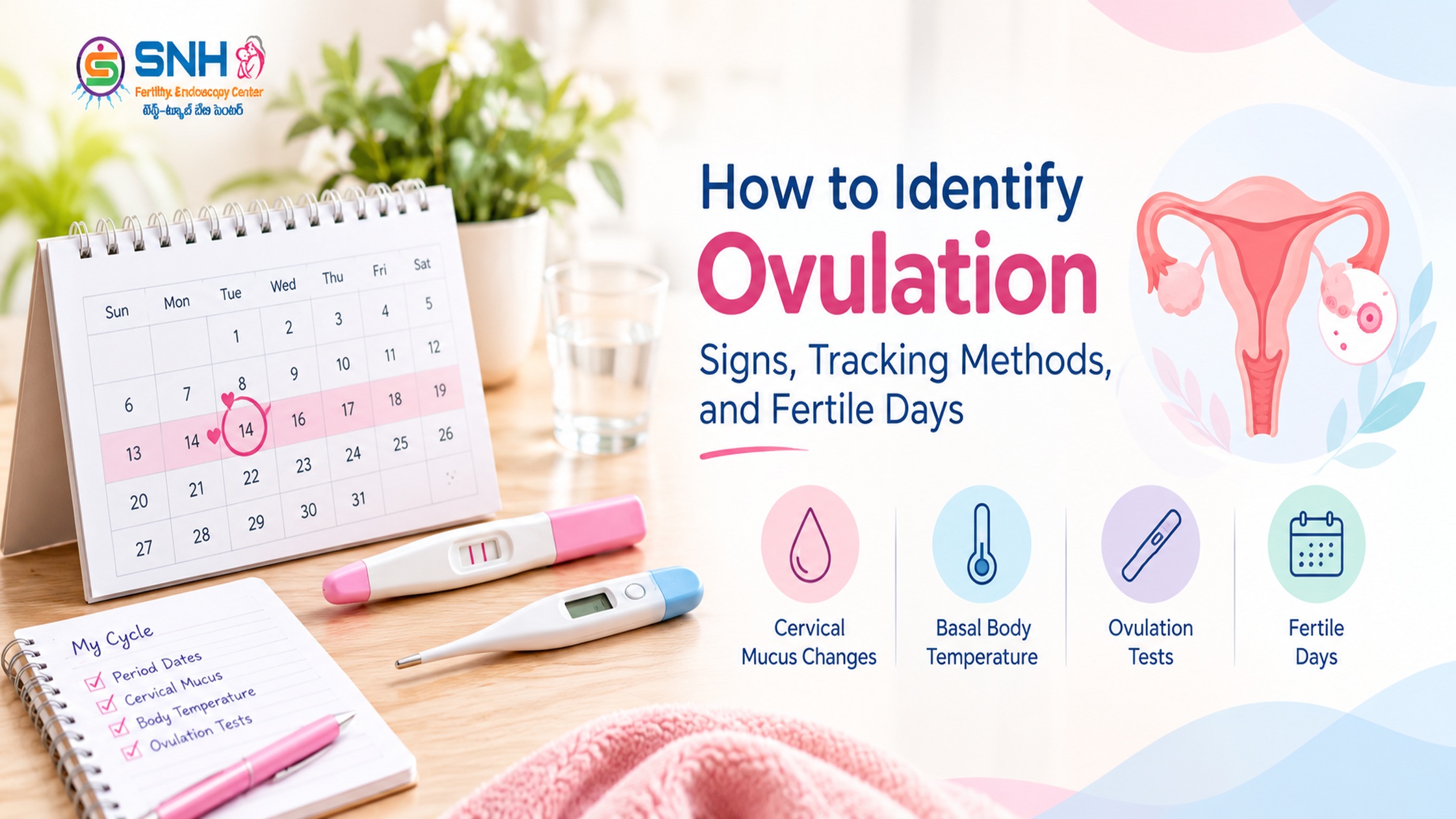
How to Identify Ovulation: Signs, Tracking Methods, and Fertile Days
Understanding ovulation is an important step for couples planning a pregnancy. By recognizing ovulation signs, tracking menstrual cycles, and identifying fertile days, women can better understand their reproductive health and improve the timing of conception.
If you are trying to conceive, knowing when ovulation occurs can help you plan your next steps. A consultation with a Trusted Fertility hospital in Nellore can also help you understand your menstrual cycle, identify possible ovulation problems, and explore suitable fertility care when needed.
What Is Ovulation?
Ovulation is the natural process in which one of the ovaries releases a mature egg. The egg travels into the fallopian tube, where fertilization may occur if sperm are present.
In a typical 28-day menstrual cycle, ovulation often occurs around day 14. However, the exact timing varies depending on the length and regularity of your cycle.
The egg usually remains available for fertilization for approximately 12–24 hours after release, while sperm can survive in the female reproductive tract for up to five days under suitable conditions. This is why identifying your fertile window is important when trying to conceive.
What Are the Common Signs of Ovulation?
Some women notice physical changes around ovulation, while others experience few or no noticeable symptoms. Recognizing these changes may help you estimate when you are most fertile.
- Changes in Cervical Mucus
One of the most noticeable signs of approaching ovulation is a change in vaginal discharge.
As ovulation approaches, cervical mucus may become:
- Clear and watery.
- Slippery and stretchy.
- Similar in consistency to raw egg white.
- More noticeable than at other times of the menstrual cycle.
This type of mucus helps sperm move through the reproductive tract. After ovulation, the discharge often becomes thicker, cloudier, or less noticeable.
- Mild Pelvic Pain or Cramping
Some women experience mild pain on one side of the lower abdomen around ovulation. This is sometimes called mittelschmerz.
The discomfort may last from a few minutes to a day or two. However, pelvic pain alone cannot confirm ovulation. Severe, persistent, or unusual pain should be assessed by a healthcare professional.
- Slight Increase in Basal Body Temperature
Basal body temperature (BBT) is your body’s resting temperature, measured immediately after waking up and before getting out of bed.
Following ovulation, hormonal changes can cause a small rise in temperature. Recording your temperature daily over several menstrual cycles may help you recognize this pattern.
However, BBT usually helps identify ovulation after it has occurred rather than predict it in advance.
- Breast Tenderness or Bloating
Some women notice breast tenderness, abdominal bloating, or mild changes in their usual physical comfort around ovulation.
These symptoms can also occur because of other hormonal changes and health conditions. Therefore, they should not be used as the only method of identifying fertile days.
- Changes in Sexual Desire
Some women report changes in sexual desire during their fertile window. This may occur alongside other hormonal changes, but it is not a reliable indicator of ovulation on its own.
How to Track Ovulation at Home
Several methods can help you estimate when ovulation is likely to occur. Combining methods may provide a clearer picture than relying on a single sign.
- Track Your Menstrual Cycle
Start by recording the first day of each period. That date is day one of your menstrual cycle.
If your cycles are reasonably regular, ovulation often occurs about 14 days before your next period begins.
For example, if your cycle usually lasts 28 days, ovulation may occur around day 14. If your cycle lasts 32 days, ovulation may occur around day 18. These are estimates, not guarantees.
A calendar or period-tracking application can help you identify patterns over several months. However, apps cannot confirm that ovulation has actually occurred.
- Use an Ovulation Predictor Kit
Ovulation predictor kits (OPKs) are available at many pharmacies. Most urine-based kits detect a rise in luteinizing hormone (LH), which usually occurs shortly before ovulation.
A positive result generally suggests that ovulation may occur within approximately 24–48 hours, although timing varies and a positive test does not guarantee egg release.
How to use an ovulation test:
- Choose a test suitable for your cycle and follow its instructions.
- Begin testing according to the manufacturer’s recommended schedule.
- Test consistently during the expected fertile period.
- Record the results alongside your menstrual dates and other symptoms.
If your cycles are irregular or your test results are repeatedly unclear, seek advice from a fertility specialist.
- Monitor Cervical Mucus
Observe changes in vaginal discharge throughout your cycle. Clearer, wetter, slippery, and stretchy mucus can indicate that your fertile window is approaching.
You can record these changes daily in a notebook or period-tracking application.
Remember that infections, some medications, sexual activity, and other factors may affect vaginal discharge. If you notice an unusual smell, itching, irritation, or an abnormal discharge, consult a healthcare professional.
- Measure Basal Body Temperature
Use a basal body thermometer to measure your temperature every morning before getting out of bed. Try to measure at a consistent time and record the results.
A sustained, slight increase may suggest that ovulation has already occurred. Illness, disrupted sleep, alcohol, and changes in measurement time can affect readings.
BBT is most useful when combined with menstrual tracking and cervical mucus observations.
- Consider Medical Ovulation Monitoring
Home tracking methods are useful for many women, but they may not provide clear answers for everyone.
A fertility specialist may recommend:
- Ultrasound monitoring to assess follicle development.
- Blood tests, such as progesterone testing, to help assess whether ovulation has occurred.
- Hormone tests when a hormonal imbalance is suspected.
- Further evaluation if menstrual cycles are irregular or ovulation is not occurring consistently.
The appropriate tests depend on your symptoms, menstrual history, and reproductive health.
When Are Your Most Fertile Days?
The fertile window generally includes the five days before ovulation and the day of ovulation. The highest chances of conception are usually around the two days before ovulation and the day it occurs.
This window exists because sperm can survive for several days in the reproductive tract, whereas an egg usually remains viable for only about 12–24 hours after release.
If you are trying to conceive, having intercourse every one to two days during the fertile window can help improve the chances of pregnancy.
Menstrual cycle stage | What may happen |
Early cycle | Menstruation begins and the uterine lining sheds. |
Before ovulation | A follicle develops, and cervical mucus may become wetter and more slippery. |
Around ovulation | An egg is released; the chances of conception are highest around this time. |
After ovulation | Basal body temperature may rise slightly, and cervical mucus may become thicker. |
Your fertile days are not always the same dates each month. Even women with regular periods can experience variations in ovulation timing.
What Can Cause Irregular Ovulation?
Irregular ovulation or the absence of ovulation can make it more difficult to predict fertile days. Possible causes include:
- Polycystic ovary syndrome (PCOS).
- Thyroid disorders or other hormonal imbalances.
- Significant weight changes or being underweight.
- Excessive exercise or prolonged stress.
- Certain medications.
- Age-related changes in reproductive function.
Occasional changes in cycle timing do not necessarily indicate a fertility problem. However, repeated irregular periods, missed periods, or difficulty identifying ovulation may warrant medical assessment.
How Can a Fertility Specialist Help?
If you have been trying to conceive without success, or you are unsure whether ovulation is occurring, a fertility consultation can help you understand the possible reasons.
At SNH Fertility Care, patients can seek guidance on fertility evaluation and appropriate next steps based on their individual circumstances.
You can learn more about the centre on the About SNH Fertility Care page and explore the specialists at SNH Fertility Care.
A fertility assessment may help identify ovulation-related concerns and determine whether cycle monitoring, medical treatment, or further investigations are appropriate.
When Should You Consult a Fertility Specialist?
Consider seeking professional advice if:
- Your periods are frequently irregular or absent.
- You rarely notice signs of ovulation and have concerns about your cycle.
- You have been trying to conceive for 12 months if you are under 35, or for six months if you are 35 or older.
- You have a known condition that may affect fertility.
- You experience severe pelvic pain or unusually heavy bleeding.
You do not have to wait for these time periods if your periods are absent or irregular, or if you already know of a potential fertility concern. Earlier assessment may be appropriate.
If you would like personalized guidance, you can book an appointment with SNH Fertility Care.
Frequently Asked Questions (FAQs)
- How can I identify ovulation naturally?
You can estimate ovulation by tracking your menstrual cycle, observing cervical mucus changes, and measuring basal body temperature. Using multiple methods together may provide a clearer picture, but home tracking cannot always confirm ovulation.
- How many days after a period does ovulation occur?
It depends on your cycle length. In a typical 28-day cycle, ovulation often occurs around day 14, counting the first day of menstrual bleeding as day one. Shorter or longer cycles can shift this timing.
- What is the most reliable way to predict ovulation?
Urine-based ovulation predictor kits detect the LH surge that often precedes ovulation. Cervical mucus tracking can also help identify fertile days. A clinician may recommend ultrasound or blood tests when further assessment is needed.
- Can I ovulate without noticing any symptoms?
Yes. Some women have few or no noticeable symptoms around ovulation. The absence of symptoms does not necessarily mean that ovulation is not occurring.
- Can I get pregnant if I have irregular periods?
Yes, pregnancy is possible with irregular periods, but ovulation may be harder to predict. If your periods are consistently irregular, consult a healthcare professional to assess possible causes and discuss appropriate support.
- Can an ovulation test confirm that I have released an egg?
A positive ovulation predictor kit detects an LH surge and suggests that ovulation may be approaching. It does not prove that an egg was released. Depending on your circumstances, a clinician may recommend additional tests.
Conclusion
Identifying ovulation can help you understand your menstrual cycle and plan for pregnancy. Tracking periods, observing cervical mucus, using ovulation predictor kits, and monitoring basal body temperature are practical ways to estimate fertile days.
However, ovulation patterns differ from person to person, and home tracking does not always provide a definitive answer. If you have irregular periods, concerns about ovulation, or difficulty conceiving, professional fertility guidance can help you understand your options.
For individualized support, connect with SNH Fertility Care, a Trusted Fertility hospital in Nellore, to discuss your fertility concerns and explore the next steps appropriate for you.