
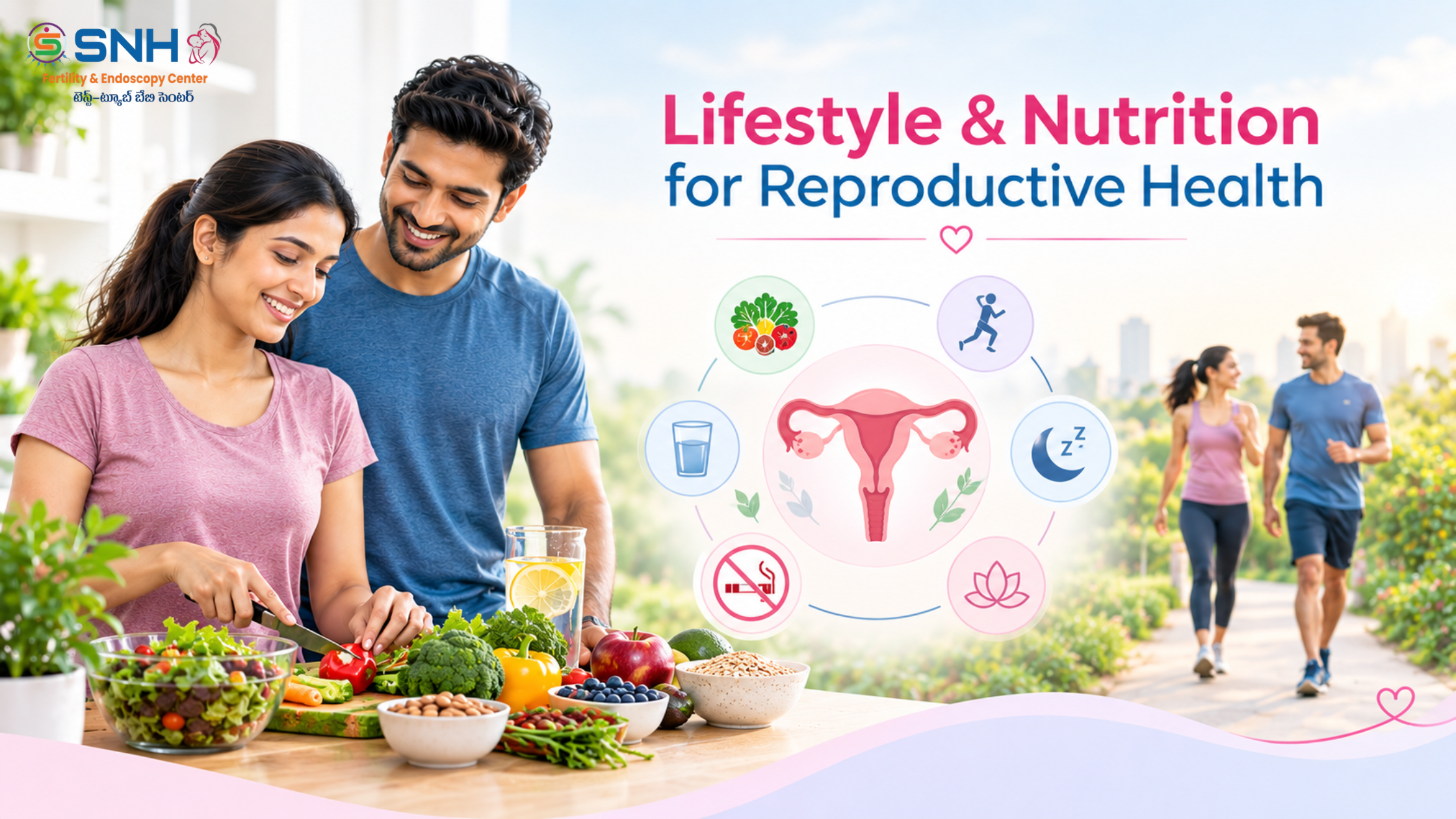
How Can Lifestyle and Nutrition Support Reproductive Health?
Healthy lifestyle habits and balanced nutrition can support overall reproductive health, although they cannot guarantee pregnancy or prevent every cause of infertility.
Factors such as age, ovulation, sperm health, hormonal conditions, fallopian-tube health and underlying medical conditions can all influence fertility.
A balanced diet, regular physical activity, adequate sleep, avoiding tobacco and maintaining a healthy weight can contribute to overall health. The World Health Organization’s guidance on healthy diets recommends a varied diet containing nutritious foods such as vegetables, fruits, whole grains, pulses and nuts.
For people searching for Trusted Fertility hospitals in Nellore, understanding how everyday lifestyle choices may relate to reproductive health can be an important first step.
Why Does Nutrition Matter for Fertility?
Nutrition provides the body with energy and essential nutrients needed for normal physiological functions.
A healthy eating pattern can include:
- Vegetables and leafy greens
- Fresh fruits
- Whole grains
- Pulses and legumes
- Nuts and seeds
- Eggs and other protein sources
- Fish or other appropriate protein sources
- Dairy or suitable alternatives
- Adequate water
The WHO’s healthy diet recommendations emphasize dietary variety, balance, moderation and adequate nutrition.
There is no single “fertility food” that can guarantee conception. Instead, focusing on overall dietary quality can support general health while planning a pregnancy.
Which Nutrients Are Important When Planning a Pregnancy?
Folic Acid
Folic acid is particularly important before conception and during early pregnancy. Adequate folic acid intake can help reduce the risk of neural tube defects.
The American Society for Reproductive Medicine discusses folic acid supplementation as part of preconception care in its guidance on optimizing natural fertility.
Individual supplementation needs can vary, so it is advisable to discuss supplements with a healthcare professional.
Iron
Iron is important for producing healthy red blood cells. Foods containing iron include lentils, beans, leafy vegetables, eggs and meat.
Protein
Protein supports tissue maintenance and numerous biological processes. Pulses, beans, eggs, fish, dairy products, nuts and seeds can provide protein as part of a balanced diet.
Healthy Fats
Unsaturated fats from foods such as nuts, seeds, fish and plant oils can also be included in a balanced dietary pattern.
Rather than focusing on one nutrient, maintaining a varied and nutritious diet is generally more useful.
Can Maintaining a Healthy Weight Support Fertility?
Body weight can be one of several factors associated with reproductive health.
Being significantly underweight or having obesity may be associated with reproductive difficulties in some people. The World Health Organization’s information on infertility identifies obesity among factors that may affect fertility.
However, fertility should not be reduced to body weight alone.
Other factors can include:
- Age
- Ovulation
- PCOD/PCOS
- Endometriosis
- Ovarian reserve
- Fallopian-tube health
- Sperm count and quality
- Hormonal conditions
- Previous pelvic conditions
This is why people searching for Trusted Fertility hospitals in Nellore should seek individualized medical advice rather than relying only on weight-loss or dietary programs.
Does Exercise Affect Reproductive Health?
Regular physical activity is an important part of overall health.
Walking, swimming, cycling, yoga and other moderate physical activities can be incorporated into a healthy lifestyle.
The goal should be to support overall fitness and wellbeing rather than treating exercise as a standalone fertility treatment.
People undergoing fertility treatment or managing specific medical conditions should discuss an appropriate exercise routine with their healthcare provider.
How Does Sleep Affect Reproductive Health?
Sleep is another important part of general wellbeing.
Poor or inadequate sleep can affect energy, mood, stress management and overall health. Maintaining a consistent sleep schedule can therefore be a useful part of a healthy lifestyle.
Some helpful habits include:
- Maintaining consistent sleeping and waking times
- Limiting excessive screen exposure before bedtime
- Creating a comfortable sleep environment
- Avoiding excessive caffeine late in the day
- Practicing healthy stress-management techniques
Lifestyle improvements should complement appropriate fertility evaluation when conception is taking longer than expected.
Can Smoking Affect Fertility?
Yes. Tobacco exposure is an important modifiable factor associated with reproductive health.
The American Society for Reproductive Medicine discusses the relationship between tobacco exposure and reproductive outcomes in its guidance on tobacco and reproductive health.
Avoiding smoking and reducing exposure to secondhand smoke can therefore be an important part of preparing for pregnancy.
For people searching for Trusted Fertility hospitals in Nellore, fertility care should be considered as more than just procedures such as IVF or IUI. Lifestyle factors may also be discussed as part of a broader reproductive-health assessment.
What About Alcohol and Caffeine?
Alcohol and caffeine intake may be relevant when planning a pregnancy.
The ASRM guidance on optimizing natural fertility discusses alcohol and caffeine consumption in relation to fertility and preconception health.
If you are planning pregnancy, speak with your healthcare provider about your individual intake and circumstances.
Does Lifestyle Affect Male Fertility Too?
Yes. Fertility involves both partners.
Male reproductive health can be influenced by factors including:
- Smoking
- Excessive alcohol consumption
- Obesity
- Certain medications
- Hormonal conditions
- Some medical conditions
- Environmental exposures
- Sperm production and function
The WHO’s infertility information discusses several lifestyle and health factors that can influence fertility.
Therefore, fertility evaluation may involve both partners rather than focusing only on the woman.
Can Lifestyle Changes Cure Infertility?
No. Lifestyle changes should not be considered a cure for infertility.
Healthy habits can support general health and may contribute to reproductive wellbeing, but they cannot correct every cause of infertility.
Infertility may be associated with conditions such as:
- Blocked fallopian tubes
- Endometriosis
- Ovulation disorders
- Reduced ovarian reserve
- PCOD/PCOS
- Male-factor infertility
- Hormonal disorders
- Certain genetic factors
- Age-related fertility changes
Professional evaluation can help identify possible causes and determine whether further treatment is appropriate.
When Should You Consult a Fertility Specialist?
You may consider speaking with a fertility specialist if:
- You have been trying to conceive without success
- Your periods are irregular or absent
- You have PCOD/PCOS or endometriosis
- You have concerns about ovarian reserve
- You have previously undergone pelvic surgery
- There are concerns about sperm count or quality
- You have experienced recurrent pregnancy loss
- You have other medical conditions that may affect fertility
The appropriate timing for evaluation can vary depending on age, medical history and individual circumstances.
If you are researching Trusted Fertility hospitals in hyderabad, consider looking at the specialists, diagnostic services and fertility treatment options available before choosing a provider.
Frequently Asked Questions
- Can a healthy diet improve fertility?
A healthy diet supports overall health, but there is no single diet proven to guarantee natural conception. A varied and balanced dietary pattern is generally recommended.
- Which foods are good for reproductive health?
Vegetables, fruits, whole grains, pulses, nuts, seeds and appropriate protein sources can form part of a balanced diet.
- Does exercise help fertility?
Regular physical activity supports overall health. However, exercise should not be considered a standalone treatment for infertility.
- Does smoking affect fertility?
Smoking is associated with adverse reproductive outcomes and is a modifiable factor that should be avoided when trying to conceive.
- Should men also change their lifestyle when trying for a baby?
Yes. Reproductive health involves both partners, and healthy lifestyle habits can be relevant to male as well as female reproductive health.
- Can lifestyle changes replace fertility treatment?
No. Lifestyle changes may support general health, but an underlying fertility condition may require medical evaluation and appropriate treatment.
- When should I seek fertility advice?
The appropriate timing depends on factors such as age, medical history and how long you have been trying to conceive. A fertility specialist can provide individualized guidance.
Expert Fertility Care at SNH Fertility & Endoscopy Center
Lifestyle and nutrition are only one part of reproductive health. When pregnancy does not occur as expected, identifying possible underlying factors is important.
You can learn more about SNH Fertility & Endoscopy Center through the About Us page, explore the SNH Fertility Care Blog for more fertility information, or learn about the fertility specialists at SNH.
For people searching for Trusted Fertility hospitals in Nellore, it is important to verify the provider’s actual location, available services and specialist expertise before scheduling a consultation.
Take the Next Step Toward Better Reproductive Health
A healthy lifestyle can be an important part of preparing for pregnancy, but every fertility journey is different. If you have concerns about conception, ovulation, reproductive health or male fertility, professional evaluation can help you understand the factors involved.
Looking for personalized fertility guidance? Explore SNH Fertility Care and connect with the fertility team to discuss your individual needs.
Trusted Fertility hospitals in Nellore is a search phrase people may use when researching fertility care, but always verify the provider’s actual location and services before booking an appointment.