Can PCOD and PCOS Affect Pregnancy?
Yes. PCOS can affect fertility mainly because it may cause irregular or absent ovulation. However, having PCOS does not mean you cannot become pregnant. Many women with PCOS conceive naturally or with appropriate fertility treatment.
PCOS is one of the most common causes of ovulatory infertility. Hormonal changes associated with PCOS can interfere with the regular release of an egg from the ovary. Treatment can help restore or stimulate ovulation when needed.
If you are experiencing irregular periods or difficulty conceiving, consulting a Trusted Fertility Hospital in Nellore can help identify the underlying cause and determine the right treatment approach.
What Is PCOD?
PCOD, commonly used to describe Polycystic Ovarian Disease, is often used interchangeably with PCOS in everyday conversation. However, PCOS (Polycystic Ovary Syndrome) is the medically recognized condition and involves a broader hormonal and metabolic pattern.
PCOS may involve:
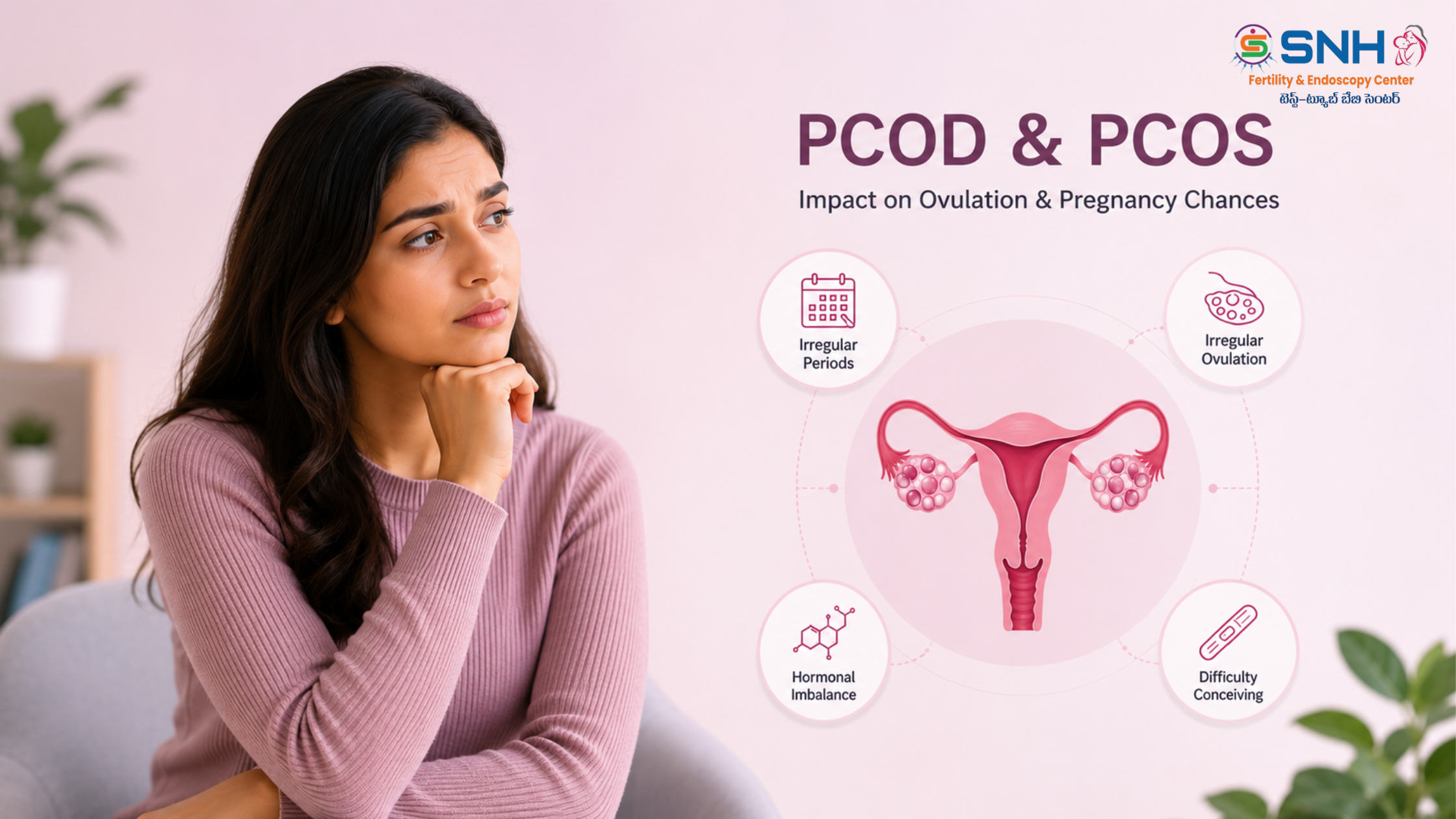
- Irregular or absent periods
- Irregular ovulation
- Higher androgen levels
- Acne or oily skin
- Excess facial or body hair
- Difficulty becoming pregnant
- Metabolic concerns such as insulin resistance
PCOS affects an estimated 10–13% of reproductive-aged women worldwide, according to the World Health Organization.
What Is PCOS?
Polycystic Ovary Syndrome is a hormonal and metabolic condition that can affect menstrual cycles, ovulation, fertility and metabolism.
Despite the name, having ovarian cysts is not necessary for a PCOS diagnosis. Diagnosis involves evaluating symptoms, hormone levels, menstrual patterns and, when appropriate, ultrasound findings while excluding other possible causes.
This is why women should not diagnose themselves based only on an ultrasound report.
A qualified fertility specialist at a Trusted Fertility Hospital in Nellore can evaluate symptoms and medical history and recommend appropriate investigations.
PCOD vs PCOS: Are They the Same?
PCOD and PCOS are often used as if they mean exactly the same thing, but there is an important distinction.
PCOD | PCOS |
Commonly used term for polycystic ovarian disease | Medically recognized term: Polycystic Ovary Syndrome |
Often used to describe irregular ovulation and ovarian changes | A broader hormonal and metabolic syndrome |
Usage can vary between healthcare settings | Has established diagnostic criteria |
May be used casually in everyday conversations | Requires appropriate clinical evaluation |
If you have been told that you have “PCOD,” it is worth discussing your symptoms and test results with a qualified doctor to understand whether you meet the diagnostic criteria for PCOS.
How Does PCOS Affect Ovulation?
PCOS can interfere with the normal hormonal process required for ovulation.
Normally, an egg develops inside an ovarian follicle and is released during ovulation. In PCOS, hormonal changes—including elevated androgen levels in some women—can interfere with follicle development and the regular release of an egg.
As a result, some women may:
- Ovulate irregularly
- Ovulate less frequently
- Go several weeks or months without ovulating
- Have irregular menstrual cycles
- Have difficulty predicting their fertile window
Because pregnancy generally requires ovulation, irregular ovulation can make conception more difficult.
This does not, however, mean that pregnancy is impossible.
Does PCOS Mean You Cannot Get Pregnant?
No. Women with PCOS can get pregnant.
PCOS may make conception more difficult because ovulation can be unpredictable or absent in some cycles. However, treatments are available to help women who are not ovulating regularly.
The American College of Obstetricians and Gynecologists notes that women with PCOS can become pregnant and that medications may be used to help induce ovulation when appropriate.
If you are trying to conceive with PCOS, a Trusted Fertility Hospital in Nellore can evaluate your ovulation, reproductive health and other factors that may affect conception.
What Are the Common Symptoms of PCOS?
PCOS symptoms vary from woman to woman.
Common symptoms may include:
- Irregular Periods
Periods may occur infrequently, unpredictably, or sometimes stop for a period of time.
- Difficulty Getting Pregnant
Irregular ovulation can reduce the number of opportunities for conception.
- Excess Facial or Body Hair
Higher androgen levels may contribute to increased hair growth.
- Acne or Oily Skin
Hormonal changes can contribute to acne and increased oil production.
- Hair Thinning
Some women experience thinning of scalp hair.
- Weight or Metabolic Changes
Some women with PCOS experience weight gain or insulin resistance, although PCOS can also occur in women who are not overweight.
The WHO notes that PCOS symptoms and their severity can differ significantly between individuals.
How Is PCOS Diagnosed?
PCOS should be diagnosed by a qualified healthcare professional after considering symptoms, medical history and appropriate testing.
Generally, diagnosis involves assessing features such as:
- Signs or laboratory evidence of elevated androgens
- Irregular or absent menstrual periods
- Polycystic ovarian morphology on ultrasound
Other conditions that can cause similar symptoms should also be excluded. Importantly, not every woman with PCOS has polycystic-appearing ovaries on ultrasound.
Depending on the individual situation, a doctor may recommend blood tests, ultrasound and other fertility-related investigations.
How Can PCOS Affect Pregnancy Chances?
PCOS can affect pregnancy chances primarily by disrupting ovulation.
For pregnancy to occur naturally, an egg generally needs to be released from the ovary and available for fertilization. When ovulation happens infrequently, there may be fewer opportunities for conception.
However, pregnancy chances depend on much more than PCOS alone.
Other factors include:
- Age
- Ovarian reserve
- Fallopian tube health
- Uterine health
- Sperm count and quality
- Frequency and timing of intercourse
- Other hormonal conditions
- Overall reproductive health
Therefore, women with PCOS should not assume that PCOS is automatically the only cause of difficulty conceiving.
A complete fertility evaluation at a Trusted Fertility Hospital in Nellore can help identify whether additional fertility factors are involved.
Can PCOS Be Treated to Improve Ovulation?
Yes. Treatment can help manage PCOS symptoms and improve fertility in women who are having difficulty ovulating.
Treatment depends on whether the immediate goal is pregnancy, menstrual-cycle management, symptom control or long-term metabolic health.
For women trying to conceive, treatment may include:
Lifestyle Management
Healthy eating, regular physical activity and sustainable lifestyle habits can support overall health and may improve metabolic health and reproductive function.
The WHO recommends healthy eating and physical activity for women with PCOS, regardless of whether they result in weight loss.
Ovulation-Induction Medicines
For women who do not ovulate regularly, a fertility specialist may recommend medication to stimulate ovulation.
Treatment should be individualized and monitored by a qualified fertility professional.
IUI
In selected cases, intrauterine insemination may be considered depending on ovulation, sperm factors, age and other fertility findings.
IVF
IVF may be considered when other fertility treatments are unsuccessful, when additional fertility factors are present, or when a specialist determines that IVF is the most appropriate option.
The WHO recognizes lifestyle measures, medicines to stimulate ovulation and assisted reproductive technologies such as IVF among fertility treatment approaches for PCOS-related infertility.
Can Lifestyle Changes Help Women With PCOS?
Healthy lifestyle habits can support PCOS management, but they should not be presented as a guaranteed cure.
Helpful habits may include:
- Eating a balanced diet
- Staying physically active
- Maintaining a healthy sleep routine
- Managing stress
- Avoiding smoking
- Limiting excessive alcohol consumption
- Attending regular medical checkups
- Following prescribed treatment
There is currently no cure for PCOS, but appropriate management can reduce symptoms, support fertility and help address longer-term health risks.
When Should You See a Fertility Specialist for PCOS?
You may benefit from a fertility consultation if:
- Your periods are consistently irregular.
- You have been diagnosed with PCOS and want to become pregnant.
- You rarely or never seem to ovulate.
- You have been trying to conceive without success.
- You have experienced recurrent pregnancy loss.
- You have other known reproductive health conditions.
- Your partner has possible male fertility concerns.
For women with known ovulatory problems or another identifiable fertility risk factor, fertility evaluation does not necessarily need to wait for a full year of trying.
Seeking guidance from a Trusted Fertility Hospital in Nellore can help you understand whether you need ovulation tracking, fertility testing, ovulation induction or another treatment.
PCOS and Pregnancy: What Should Women Know?
Women with PCOS can become pregnant, but pregnancy may require closer attention to certain health factors.
PCOS is associated with increased risks of some pregnancy complications, including gestational diabetes and high blood pressure. This is one reason pre-pregnancy assessment and appropriate pregnancy monitoring are important.
If you have PCOS and are planning pregnancy, discuss your health history and medications with your doctor before trying to conceive.
Frequently Asked Questions About PCOD, PCOS and Fertility
- Can PCOS cause infertility?
PCOS can contribute to infertility because it is a common cause of irregular or absent ovulation. However, PCOS-related infertility can often be treated with appropriate medical care.
- Can I get pregnant naturally with PCOS?
Yes. Some women with PCOS become pregnant naturally, while others may need medication or fertility treatment to help with ovulation.
- Does having irregular periods mean I have PCOS?
Not necessarily. Irregular periods can have several causes. A healthcare professional should evaluate the symptoms and rule out other conditions before diagnosing PCOS.
- Do I need IVF if I have PCOS?
Not necessarily. IVF is only one fertility treatment option. Depending on the cause of infertility, age and other factors, a doctor may recommend lifestyle management, ovulation induction, IUI or IVF.
- Can ovulation induction help with PCOS?
Yes. Ovulation-induction medication can be used for some women with PCOS who do not ovulate regularly. The appropriate medicine and monitoring plan should be determined by a fertility specialist.
- Does PCOS go away after pregnancy?
PCOS is a chronic condition and does not necessarily disappear after pregnancy. Symptoms can change over time, so continued health monitoring may be appropriate.
- Is PCOD the same as PCOS?
The terms are often used interchangeably, but PCOS is the established medical term. If you have been diagnosed with PCOD, discuss your diagnosis and test results with your healthcare provider.
- When should I visit a fertility hospital for PCOS?
If you have PCOS and are planning pregnancy, have irregular ovulation, or are experiencing difficulty conceiving, a fertility consultation can help determine the next step.
PCOD and PCOS can affect ovulation and make pregnancy more difficult, but a PCOS diagnosis does not mean that pregnancy is impossible.
The main fertility challenge associated with PCOS is often irregular or absent ovulation. With appropriate diagnosis and individualized management, many women can improve their chances of conception.
The most important step is to avoid self-diagnosis and avoid assuming that PCOS is the only reason for difficulty conceiving.
If you are looking for a Trusted Fertility Hospital in Nellore, SNH Fertility Care provides fertility evaluation and treatment options tailored to individual reproductive needs.
Learn more about fertility care at SNH Fertility Care.
Why Choose SNH Fertility Care?
SNH Fertility Care provides fertility and IVF care in Nellore, with services including IVF/ICSI, IUI, male infertility treatment, fertility preservation, diagnostics and personalized fertility solutions.
If PCOS is affecting your ovulation or you have concerns about your chances of pregnancy, professional evaluation can help you understand your options.
Start Your Fertility Journey Today
Don’t let PCOS-related fertility concerns stop you from seeking answers.
Book a consultation with SNH Fertility Care to discuss your fertility goals and receive personalized guidance.
Choose informed care, personalized guidance and experienced fertility support from a Trusted Fertility Hospital in Nellore.